
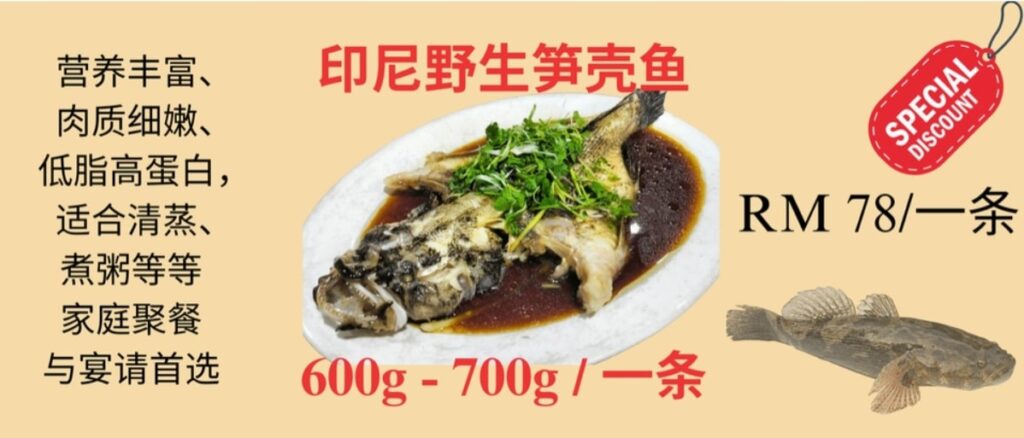
🐟 The Marble Goby (Soon Hock) – A Freshwater Treasure of Asia
The Marble Goby, known locally in Southeast Asia as Soon Hock (笋壳鱼) and scientifically as Oxyeleotris marmorata, has carved a niche for itself in gourmet cuisine and commercial aquaculture. Revered for its delicate texture, mild flavor, and cultural symbolism of prosperity, the Marble Goby commands a premium price in restaurants and fish markets across Asia. This article explores the biology, aquaculture practices, and marketing strategies that make the Marble Goby a freshwater treasure.
🧬 I. Biology & Aquaculture Fundamentals
1️⃣ Species Profile
Marble Goby is a carnivorous, slow-growing species native to freshwater lakes and rivers across Southeast Asia. It can grow up to 60 cm and weigh 3–4 kg in optimal conditions.
- 🔹 Scientific name: Oxyeleotris marmorata
- 🔹 Common names: Marble Goby, Soon Hock (笋壳鱼), Marble Sleeper
- 🔹 Natural habitat: muddy bottoms of rivers, lakes, and ponds
- 🔹 Lifespan: 5–10 years
2️⃣ Water Quality Management
Maintaining optimal water conditions is crucial for health and growth:
- 💧 pH: 6.5–7.5
- 🌡️ Temperature: 28–32°C
- 🌬️ Dissolved Oxygen (DO): ≥5 mg/L
- 🧪 Ammonia: Maintain below 0.02 mg/L with good filtration
Use of Recirculating Aquaculture Systems (RAS) is recommended for consistent control.
3️⃣ System Design
- 🏞️ Pond size: 500–1,000 m² per unit (or tanks 10,000L+)
- 💦 Depth: 1.2–1.5 meters
- 🐟 Stocking density: 10–15 fish/m² for juveniles
- 🌿 Substrate: Muddy or soft bottom preferred
- 🏠 Shelters: Use of PVC tubes or submerged structures
4️⃣ Feeding Strategy
- 🐣 Fry (<5 cm): Feed brine shrimp or micro-pellets
- 🐠 Fingerlings (5–15 cm): High-protein sinking pellets, minced fish
- 🍽️ Grow-out (>15 cm): Daily feeding with 45% protein feed
💡 FCR (Feed Conversion Ratio): 1.2–1.6:1
Supplement with live bait or insects to enhance appetite.
5️⃣ Health & Disease Control
Common issues include:
- 🦠 Bacterial infections: treat with medicated feed
- 🍄 Fungal outbreaks: treat with salt baths or formalin
- 🐛 Water-borne parasites: avoid through UV filtration and regular siphoning
Use of probiotics and regular water testing is encouraged.
6️⃣ Harvesting & Post-Harvest Handling
- 📏 Harvest size: 500g to 1.5kg
- 🎣 Methods: Seine nets, minimal stress
- ❄️ Post-harvest: Ice slurry immersion, then transport at 2–4°C
- 🧊 Shelf life: 5–7 days fresh, up to 6 months frozen
📦 II. How to Source & Store
🐟 Live vs. Chilled
- 🟢 Live: Best flavor and texture; available in wet markets or specialty suppliers.
- 🔵 Chilled: Should be gutted and stored at 0–4°C; cook within 2 days.
🧼 Cleaning & Gutting Tips
- ⚖️ Descale gently without damaging the skin.
- 🧂 Remove guts and rinse with salted water to reduce slime.
- 🧊 Keep fish moist in fridge with a clean cloth or cling wrap.
🍳 III. How It’s Commonly Cooked
- 🥢 Steamed (清蒸): Classic Cantonese method with ginger, scallions, and soy sauce.
- 🍲 Braised (红烧): Slow-braised with soy, sugar, and aromatics.
- 🍤 Fried (香煎): Lightly floured and pan-fried till golden, then sauced.
- 🍜 Soup (鱼汤): Simmered with tofu, ginger, and goji berries for a nourishing broth.
🔥 Cooking Tips for Best Texture
- ⏱️ Timing: Steam for 7–10 minutes depending on size; avoid overcooking.
- 🧽 Skin/slime removal: Use hot water blanching or salt scrub before cooking.
- 🍶 Soy Sauce Pairing: Use light soy with a dash of Shaoxing wine and sesame oil.
📖 Popular Soon Hock Recipes 🔗
- 🔗 Cantonese Steamed Soon Hock: Delicate and pure in flavor.
- 🔗 Soy-Braised Marble Goby: A rich and umami-heavy dish.
- 🔗 Fried Soon Hock with Thai Sauce: Sweet, sour, and crunchy.
- 🔗 Herbal Fish Soup with Soon Hock: A healing, aromatic broth.
(Each recipe article includes ingredients, steps, and preparation images.)
💬 FAQ
❓ Q1: Is Marble Goby the same as Soon Hock?
✅ Yes, “Soon Hock” is the Cantonese name for Marble Goby.
❓ Q2: What sauces go best with it?
Light soy sauce, oyster sauce, and ginger-scallion oil are classic pairings that complement the fish’s delicate flavor.
❓ Q3: Can I cook it whole or in fillets?
Whole is preferred for steaming to preserve moisture, while fillets are easier for frying or soup-based recipes.
🛒 Where to Buy
- 🏪 Wet markets: Check seafood stalls with live tanks for the freshest options.
- 💻 Online seafood suppliers: Many offer next-day chilled delivery.
- 🥢 Specialty grocery stores: Look for live or pre-packed chilled Soon Hock.
💭 Final Thoughts
Marble Goby (Soon Hock) is not just a delicacy but a cultural icon. Whether you’re a seasoned chef or a home cook exploring Asian flavors, learning to prepare this fish elevates your culinary repertoire. Explore our linked recipes above to begin your Marble Goby journey.
📘 IV. Frequently Asked Questions (FAQ)
Q1: Is Marble Goby suitable for beginner fish farmers?
🐠 Yes! With proper system setup and guidance, they are hardy but slow-growing — ideal for beginners in freshwater aquaculture.
Q2: Can it be grown in biofloc systems?
❌ Less ideal. Marble Goby prefers clear water and performs better in RAS or earthen ponds with clean substrate.
Q3: How long until harvest size?
⏳ Typically 10–12 months to reach 800g–1kg harvest size under proper feeding and temperature control.
Q4: What makes it a luxury fish?
💎 Its cultural symbolism of prosperity, delicate meat, and slow growth make it a premium-priced, high-demand fish across Asia.
🏁 Conclusion
The Marble Goby (Soon Hock) stands as a symbol of refined aquaculture and culinary prestige. With its growing demand, high market price, and manageable farming practices, this freshwater gem offers substantial opportunities for aquaculture entrepreneurs. Whether you’re raising them for export or serving them in your seafood restaurant, mastering their biology, farming, and culinary appeal is key to success.